Accountant in digital world
From what I have seen and experienced, being an accountant in the digital world now is not what it was back in the paper-using era, the main role of accountants has changed nowadays and will keep changing in the future as well.
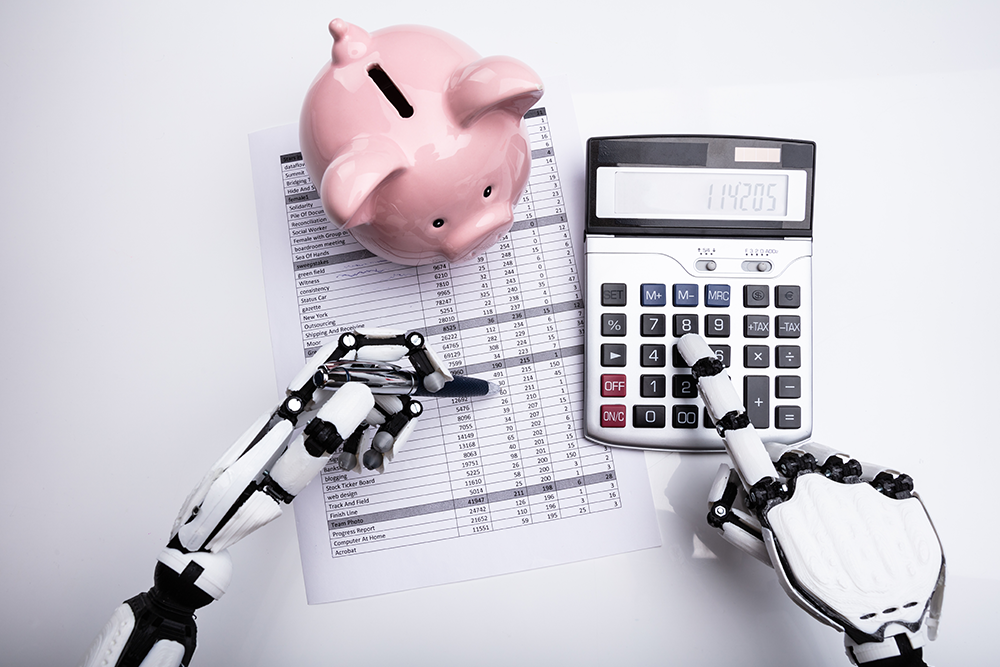
The job role of being an accountant has changed in many ways. For example, due to the influence of electronic economy, distance is no longer an issue for the accounting profession. Every capital record will be timely transmitted to the accountant through network, which makes the accountant’s work more efficient, but also highly requires the accountant to operate digital technology professionally because distance doesn’t just simply disappear, but when you are in a place where the value of the money is influenced immediately by ongoing online transactions happening many miles away, it’s definitely a different situation from how the world was in the past (Giddens, 1999). Also, Digital economy has changed the knowledge of accounting process, practices and thinking (Bhimani, 2003). Before the rise of digital economy, accountants relied on paper, pens and numerical formulas to keep track of their accounts. But today, accountants can use digital electronic systems to operate and use formulas to calculate funds and accounts, and access information about the flow of funds through the Internet, which also requires them to be able to operate professional electronic accounting systems and procedures, even accounting formulas are very different from what they used to do on the calculators. What is more, the role of accountants is no longer just a simple financial recorder in the digital economy market nowadays. They have been been developed to evaluate the company’s future capital development and even play a decision-making role. The web-enabled accounting operations have altered lots of traditional technical contingencies and organizational relationships which exist with firms (Bhimani, 2006). Accountants can audit and analyse the company’s financial situation in time through the accurate value given by the digital market, so they gradually gain more power in the company’s decision-making with the actual data. Even before a future plan is made,accountants will also be used to reference and evaluate the company’s operating condition.
The rise of the digital economy has brought many great changes to the profession of accountants, which have both advantages and disadvantages. The revolutionary changes have indeed enabled accountants to work more efficiently, but at the same time they have also made their work more complicated and can even affect the credibility of their working results due to the fact that they are receiving loads digital resources online, which is not the best place to trust. In the current environment of “digital-age”, accountants are in great demand for their “niche”auditing, accounting, investigative and legal skills, and accounting scams and frauds are perennial (Bhasin, 2015). Therefore, from the perspective of data collection of the changes in the responsibilities of accountants in the digital economy, I personally believe that in the future digital market, the role of accountants will be more modern and digital, and it is not impossible that the traditional artificial accounting methods will even be eliminated by intelligent machines. Because nowadays people have gradually relied on electronic intelligent machine in their daily life. Although it is not perfect and has many flaws, the efficiency it brings to people’s life and work is incomparable with the traditional way. Although the modern digital market has a high demand for accountants’ professionalism, it provides a lot benefits for accountants at the same time as well. Also, the unreliability of the digital economy will be improved with the improvement of the market. After all, the professional errors caused by the traditional accounting methods are more intolerable. Besides, when it comes to the replacement of artificial accountants by digital intelligent machines, I don’t mean that accountants will become completely unemployed because of the digital economy. As mentioned above, the digital economy is now changing traditional accountant’s work practices,and leaders expect accountants to be customer oriented with a broad understanding of their business(Phillips, 2008). Therefore, I think, in the future, the main responsibility of the accountants will be to analyse and audit the data without the company through the financial data of computer intelligent statistics. Their responsibilities will go beyond the simple recording and calculation, more to analyse the meaning behind the cash flow and figure out whether the company or the partners have done every transaction legally and reasonably, they will be more like analysts or judges. What is more, the intelligent system can not do this because the
operating principle of a company or a market is formulated by people, and it will be constantly adjusted and changed with people’s needs, which requires a certain combination of flexibility and professionalism, and a professional accountant will be required to do these works in the rapid development of the digital economy.
Reference
Bhasin, M. L. (2015). An emperical investigation of the relevant skills of forensic accountants: experience of a developing economy. Available at SSRN 2676519.
Bhimani, A. (2003). Digitization and accounting change. A. Bhimani (Ed.) Management Accounting in the Digital Economy, 1-12.
Bhimani, A. (2006). Management accounting and digitization (pp. 69-93). Oxford, UK: Oxford University Press.
Giddens, A. (1999). Risk and responsibility. The modern law review, 62(1), 1-10.
Marr, B. (2019). Artificial Intelligence In Accounting And Finance. Retrieved from https://bernardmarr.com/default.asp?contentID=1929
Phillips, P., & Halliday, S. V. (2008). Marketing/accounting synergy: a discussion of its potential and evidence in e-business planning. Journal of Marketing Management, 24(7-8), 751-770.
 Lisa's Blog
4 replies on “Lisa’s blog”
Hey Xiaoyu Hua!
Interesting topic about how digital business changes the role of the accountant. In your article, you mentioned that the digital business has made accountants work more efficiently since the distance is no longer bothering accountants and their works are moving from paper to computers. It is surprising to know that the digitalization could also bring trouble to accountants since their works could be more complicated and have some credit issues. But the good aspect is as digital technology’s development, the credit issues will be improved in the future.
It is enjoyable to read your article, you’ve cached the whole bunch of information here. I could absorb a lot of knowledge from your thoughts. Your style of writing is so professional, and it seems like you’ve down lots of research based on the topic. Love the way you explain the details about the digital business’s dual characters for accountants.
Thanks a lot for showing us such an informational article here !!!!!
赞Liked by 1 person
Glad that i have cached your eyes with my blog and hopefully you’ve down a great job as well!
赞赞
Digitization has replaced various processes that used to be performed manually with the technologies that provide faster and accurate results. I agree that the digital economy has removed the barrier of distance that facilitates the effective flow of information required by the accountants regardless of their locations. Previously, most of the accountants’ work used to be paper-based and more time consuming since all the calculations and analysis of data used to be completely manual. Conversely, accountants in the digitized world make use of electronic systems to deliver precise and timely results and hence ensure optimum utilization of resources. The changes brought by the technological advancement demand accountants to constantly update their knowledge and skills as per the technological changes in the market. I believe, the functions performed by the accountants will be more automated using technologies and skills as per the industry standards in the upcoming years.
赞赞
[…] https://lisainfo.data.blog/2020/02/14/example-post/ https://willnor.wordpress.com/2020/03/06/the-funding-circle/#comments […]
赞赞